STYLE
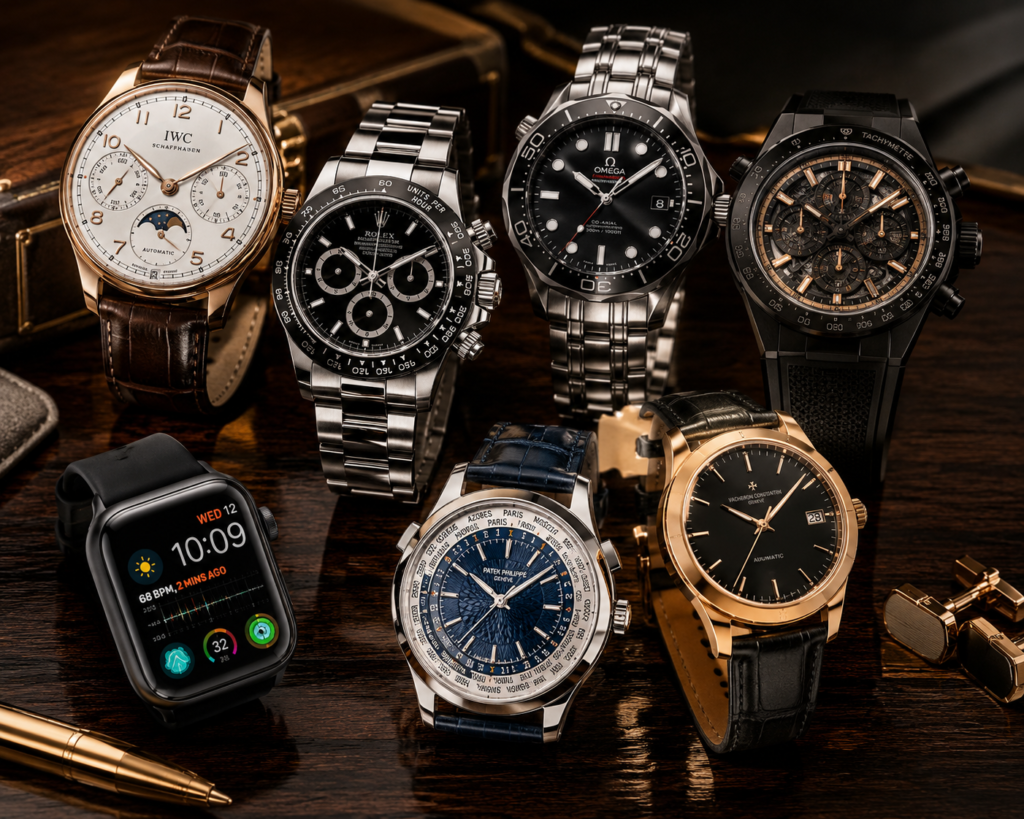
Men’s watches have long been more than simple devices for telling time. They represent personal style, craftsmanship, status, and functionality. Despite the widespread use of smartphones and other digital devices, wristwatches remain a popular accessory among men worldwide. Whether worn for professional settings, sports activities, formal events, or everyday use, a watch can say a great deal about a person’s taste and lifestyle.
The history of wristwatches dates back several centuries. Early portable timepieces were often carried in pockets, but wristwatches became increasingly popular during the late nineteenth and early twentieth centuries. Military personnel found wristwatches more practical than pocket watches, leading to widespread adoption. Over time, advancements in engineering and design transformed watches into highly sophisticated accessories that combine technology with fashion.
FUNCTIONS
One of the most important aspects of men’s watches is their variety. There are numerous categories designed to meet different needs and preferences. Dress watches are among the most elegant types. These watches typically feature slim profiles, simple dials, and premium materials such as leather straps or precious metals. They are designed to complement formal attire and are often worn at business meetings, weddings, and special occasions.
Sports watches are built for durability and performance. They often include features such as water resistance, shock resistance, stopwatches, and luminous hands for visibility in low-light conditions. Athletes and outdoor enthusiasts appreciate these watches because they can withstand demanding environments while providing accurate timekeeping.
Diving watches represent another popular category. Originally developed for underwater exploration, these watches are engineered to resist significant water pressure. They typically feature rotating bezels, highly visible markers, and robust construction. Even individuals who never dive professionally often choose diving watches because of their rugged appearance and reliability.
TIMELESS APPEAL
The movement inside a watch is one of its most important components. Mechanical watches are powered by intricate systems of gears, springs, and balance wheels. These watches require either manual winding or automatic winding through wrist movement. Many collectors appreciate mechanical watches because of their craftsmanship and engineering excellence.
Quartz watches operate differently. Powered by batteries and regulated by a quartz crystal, they are highly accurate and require minimal maintenance. Since their introduction in the twentieth century, quartz watches have become extremely popular due to their affordability, reliability, and precision.
Materials also play a significant role in watch design. Stainless steel remains one of the most common choices because of its strength, corrosion resistance, and attractive appearance. Titanium offers a lighter alternative while maintaining excellent durability. Luxury watches may incorporate gold, platinum, ceramic, or carbon fiber to enhance both aesthetics and performance.
Watch straps and bracelets contribute greatly to comfort and style. Leather straps provide a classic and sophisticated appearance suitable for formal occasions. Metal bracelets offer durability and versatility, making them appropriate for both casual and professional settings. Rubber and silicone straps are favored for sports and outdoor activities because they resist moisture and wear.
When selecting a men’s watch, several factors should be considered. The watch’s size should complement the wearer’s wrist. Oversized watches can appear bold and modern, while smaller watches often convey elegance and refinement. The dial design should match personal preferences and intended usage. Some individuals prefer minimalist designs, while others enjoy detailed dials featuring multiple complications.
Budget is another important consideration. Watches are available across a wide range of price points, from affordable everyday models to luxury timepieces costing thousands of dollars. Expensive watches often feature superior materials, advanced movements, and exceptional craftsmanship, but many affordable options also provide excellent quality and reliability
DESIGNS
The movement inside a watch is one of its most important components. Mechanical watches are powered by intricate systems of gears, springs, and balance wheels. These watches require either manual winding or automatic winding through wrist movement. Many collectors appreciate mechanical watches because of their craftsmanship and engineering excellence.
Quartz watches operate differently. Powered by batteries and regulated by a quartz crystal, they are highly accurate and require minimal maintenance. Since their introduction in the twentieth century, quartz watches have become extremely popular due to their affordability, reliability, and precision.
Materials also play a significant role in watch design. Stainless steel remains one of the most common choices because of its strength, corrosion resistance, and attractive appearance. Titanium offers a lighter alternative while maintaining excellent durability. Luxury watches may incorporate gold, platinum, ceramic, or carbon fiber to enhance both aesthetics and performance.
Watch straps and bracelets contribute greatly to comfort and style. Leather straps provide a classic and sophisticated appearance suitable for formal occasions. Metal bracelets offer durability and versatility, making them appropriate for both casual and professional settings. Rubber and silicone straps are favored for sports and outdoor activities because they resist moisture and wear.
When selecting a men’s watch, several factors should be considered. The watch’s size should complement the wearer’s wrist. Oversized watches can appear bold and modern, while smaller watches often convey elegance and refinement. The dial design should match personal preferences and intended usage. Some individuals prefer minimalist designs, while others enjoy detailed dials featuring multiple complications.
Budget is another important consideration. Watches are available across a wide range of price points, from affordable everyday models to luxury timepieces costing thousands of dollars. Expensive watches often feature superior materials, advanced movements, and exceptional craftsmanship, but many affordable options also provide excellent quality and relia